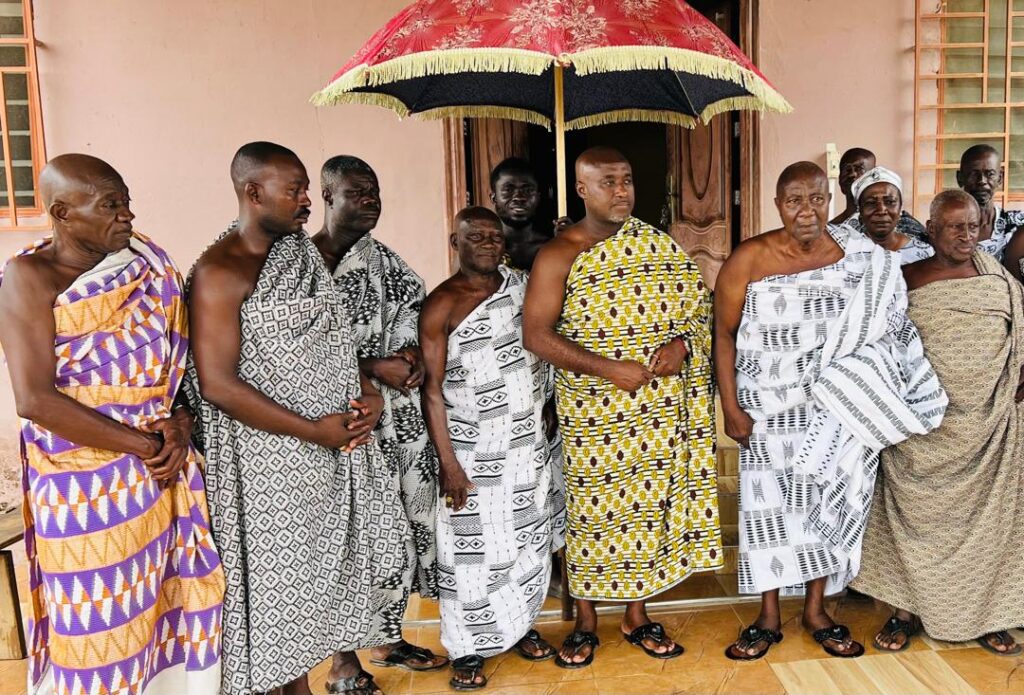
History of Mowire
Mowire traces its origins to Denkyira. According to oral history, the ancestors of the people of Mowire migrated from Denkyira during the reign of Otumfuo Osei Tutu I.
Before his enstoolment as first chief of Mowire, Ameyaw Kotoko I had a sister who married Otumfuo Osei Tutu I. Through this royal alliance, a close relationship was established between the family and the Asante royal household. As a result, Ameyaw Kotoko together with other family members moved to Kumasi to join the growing Asante Kingdom.
As the family expanded in number, Otumfuo Osei Tutu I instructed them to search for land on which they could permanently settle. The Asantehene also placed them under the care and protection of the Asafohene during this period.
In their search for a suitable place of settlement, the family found a tract of land covered with rice waste products, locally referred to as “Ɛmo Nnwura.” Over time, the name evolved linguistically into “Mowire,” which eventually became the recognised name of the town.
Following the establishment of the settlement, the Mowire Stool was created and became known as the Ameyaw Kotoko Stool. Traditionally, the Mowirehene occupies an important position within the Asante traditional structure.
The Stool is part of both the Akwamu Fekuo and the Adum Fekuo within the traditional system of Asanteman. In the Adum Fekuo, it holds the position of second in command, while in the Akwamu Fekuo it occupies the fifth position in command.
Mowire also belongs to the Aduana clan.
The town is located in the Afigya Kwabre South District of Kumasi, in the Ashanti Region.